
Category

Public Blog

Created to Reflect

By | Public Blog

In order to understand what it means to be human, we have to go back to the beginning of human history.  Even though the world tries to convince us that man is merely a mechanistic organism that is the result of billions of years of evolutionary change, the reality is that man was designed in the mind of God and created by the Word and will of God.  In Genesis 1 we find these words.
Then God said, “Let Us make man in Our image, according to Our likeness…So God created man in His own image; in the image of God He created him; male and female He created them. Genesis 1:26-27 (NKJV)

After God had spoken the rest of creation into being, He declared that the final act of creation would be the creation of man in the image of God.  This makes man the crown jewel of God’s creation.  He is uniquely designed and is the only being that has God’s image stamped on it.  Even though most Christians have heard and would agree that every person is an image bearer of God, many have not given a lot of thought to the significance of this reality.  What does it mean to be created in the image of God?

Biblical scholar D. J. A. Clines explains the meaning of Genesis 1:26-27 by stating,

Thus we may say that according to Genesis 1, man does not have the image of God, nor is he made in the image of God, but is himself the image of God.  “The Image of God in Man” ( Tyndale Bulletin 19, 1968, 53-103)

To understand what it means to be human begins with knowing that every person was created to be a “copy” or a “graphic image” of the Creator – a formal, visible, and understandable representation of who God is and what He is really like.  God’s final act of creation was done in a different pattern than His creation of all other living things.  If you read the creation account in Genesis 1, you will find that all the plants, birds in the air, creatures in the sea and animals on the land were created according to its kind (Genesis 1:11,21,24,25).  God did not follow this same pattern when He created mankind.  In his article, Imago Dei, Mark Ross explains,

When God makes man, He breaks the pattern that He has set by creating living things according to their kinds. The tenfold mention of this pattern causes us to expect it with each new living creature to appear, but something quite different happens when man is made; he is not made “according to [his] kind.” Neither is man created according to any other kind among the living creatures. Man does not, therefore, belong to their kinds, whatever similarities there may be between him and the other creatures. To put it in modern scientific language, he is not a particular species within a given genus of living creatures. Man is unlike any of the other living creatures (v. 26). Surprising as it is, man is made according to God’s “kind,” made in the image of God (imago Dei). Man, like God, is a personal being.

Some people would argue that when man sinned, he lost the image of God.  Even though God’s image in man was marred or disfigured by sin, it was not lost.  This is a very important truth if we are going to be able to understand who we are and what gives every man and woman intrinsic value and inherent worth.  Focus on the Family explains it this way in a Q&A reference on their website.

…it is precisely the Image of God that makes man human; man could not lose the Image without ceasing to be what he is. Furthermore, it is only because he retains it, even in a broken or distorted form, that man is redeemable and worth redeeming.

Over the next several weeks, I will present a series of short posts that will help us understand the significance of the words in Genesis 1 – in the image of God He created him; male and female He created them.  In the meantime here are some questions that will be helpful in understanding what it means to be human.

  1. How well does your life reflect a “graphic image” of God?
  2. How does being made according to “God’s kind” define who you are and why you are here?
  3. How has sin marred God’s image in you?
  4. How does the reality of Imago Dei address today’s cultural issues of abortion, euthanasia, gender confusion and marriage?

Three Simple Acts To Bring God’s Blessing On Your Life

By | Public Blog

I have a book on my shelf that I take down a couple of times each year.  The book was written by a young man that I first came to know while serving at Lynchburg Christian Academy.  The book’s title is The Little Red Book of Wisdom.  This small book as several short chapters that provide Christians will some keys on how to obtain true wisdom.  Mark learned these nuggets of wisdom from his father and others who God used to influence his life.

Over the years I have gleaned many things from this book that have shaped my life as a husband, father and leader.  Recently, I opened this resource to read a couple of the chapters that dealt with “Wisdom for Your Personal Life”.  The one chapter that caught my attention was The Wisdom of Firsts.  Everyone wants to be first in whatever he/she attempts to accomplish.  But this writing is not about how to be #1 but what to keep #1 in your life.

As many of us who are involved in Christian education are entering into the summer months, I thought I would share with you three simple acts that will bring God’s blessing on your life.  We all want God to bless us and have His hand of favor on all we do.  However, sometimes we fall short of experiencing this in our everyday lives.  The Wisdom of Firsts can be summed up this way: The First Hour, The First Day, The First Dime!

The First Hour

One of the things every Christian must do in order to have God’s presence in his life is to give God the first hour of every day!  There is something that happens when I start every morning spending time with the Lord.  When I open God’s Word and let Him speak to me, it changes my perspective on what I am facing at that particular time.  It also prepares me for what God has in store for my life that day — many times it’s things that I don’t even know are going to take place.

Each year I try to find a plan by which I can read the Bible through in that year.  This year I am following a plan that I found on the website for John Piper’s ministry, Desiring God.  This plan has me reading portions of the Old and New Testament each day.  Even though I have read the Bible through many times, this year I am finding myself underlining more and more passages that the words seem to almost jump off the pages.

After reading God’s Word each morning, it is also important for me to talk to God.  An early morning prayer time has proven to be so special to me as it helps me stay focused on Him throughout the day.  It is during this time of prayer that God brings to my mind others who need God’s touch on their lives.  Whenever this happens, it makes me realize that my problems are quite small as I think of others who are facing much more serious challenges in their lives.

I travel a lot in my ministry and most trips I schedule start pretty early in the morning.  Because of this I must discipline myself to set the alarm a little earlier.  If I don’t do this, I end up rushing to the airport and, before you know it, I am deep into my day’s work without getting any wisdom from the Lord that He knew I needed to accomplish what He wanted me to do that day.  So, if you want God’s blessing in your life give God the first hour of every day!

The First Day

A lot of Christians that I know are very faithful in giving God the first hour in every day.  However, this second Wisdom of Firsts is one that many of us, especially those of us in full-time ministry, struggle with.  It is also important to give God the first day of every week.  I know that you might be thinking that you do that.  You may be one who never misses a Sunday going to church.  In fact, you may even use your gifts on Sunday in service at your church.  However, I am not talking about giving God the first morning of every week.

In our fast paced lives, we can get to the point when we think that we can’t afford to cease form all of our work for a whole day.  I have come to enjoy the music ministry of Andrew Peterson.  He has written a series of songs that he put into a couple of albums called Resurrection Letters.  One of his songs is simply called, God Rested.  In it Peterson reminds the listener that six days God worked and created the world and all that is in but on the seventh day — God Rested!  When you read the Scriptures, you don’t find that He rested for a morning or for an hour but for a day.

I cannot tell you how many times I have gone to church and immediately after the services, I have rushed out into to life to do stuff that just “had to be done”.  One of the things that I have come to realize is that it is very easy to forget everything God wanted to teach you in a church service when you end up racing to your “next important task.”  I think this is what Jesus had in mind when He was teaching His disciples about sowing seed into different types of soil.

One of the types of soil that good seed fell on was soil that contained thorns.  If you know this account, Jesus explained that the seed never produced a harvest because the thorns choked the seeds and they never matured.  When Jesus explained this, He said,

Now he who received seed among the thorns is he who hears the word, and the cares of this world and the deceitfulness of riches choke the word, and he becomes unfruitful. Matthew 13:22 (NKJV)

I have experienced this happening in my life when I failed to give God the first day of every week!

The First Dime

Have you ever gone into a restaurant or business that was individually or family owned?  These types of business are many times quaint establishments that have various things on the walls or shelves that are reminders of how the business started and grew over the years.  One of the items I have seen on walls of private businesses many times is a small picture frame with a dollar bill encased inside.  It represented the “first” dollar that the original owner made in the business.
Well, God establishes His private businesses throughout the world in the lives of His children.  He calls us to do His will, equips us to do it and then sends us out to perform it for His glory.  This is called “work”.  Through our work we receive increase or pay.  Of course, we know that everything we have comes from God and that God owns it all — or so we say we believe this.  However, the third act we find in God’s Wisdom of First may be the one that is violated the most.  It is simply the act of giving God the first dime of every dollar.

The tithe is not ours to give to God but it belongs to God and we simply acknowledge that the first dime of all our increase is His by giving it back to its rightful owner.  I have talked with Christians and they have argued that it is the first dime of every “net” dollar or after taxes that one earns.  If that were the case, then it wouldn’t be a “first”.  There is not time to go into this in this blog but I encourage you to read Haggai 1:1-11 and see how God views it when we don’t keep this “first” in our lives.  We are to give God the first dime of every dollar!

Three simple acts with major consequences that we will experience if we faithfully perform them.  However, there are equal but opposite consequences in not doing them.  As you go through the summer months, I challenge you to begin the habit of the Wisdom of Firsts by giving God the first hour, day and dime.  Have a blessed summer!

Is There Not A Cause?

By | Public Blog

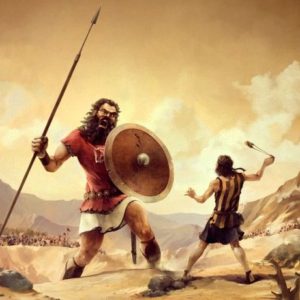
One of my favorite historical accounts found in Scripture is that of David’s fight with Goliath.  When you read about this confrontation in 1 Samuel 17, there are several points that are worthy of one’s consideration.  David is at home taking care of the sheep while his three oldest brothers are with the Israelite army fighting the Philistines.  I imagine that David must have dreamed about what it might be like to be on the battlefield instead of watching some smelly old sheep.
One day, his father gives him food supplies and sends him to check on the battle.  David is to go and see how his brothers are doing and bring a report home to his father.  David must have been excited to be asked to get the opportunity to go where the fighting was taking place. Scripture records that David got up early and hurried to the battle front.  He dropped off the supplies and went looking for his brothers.  As he approached the army of Israel his heart must have started racing as we find the following account taking place.

And he came to the camp as the army was going out to the fight and shouting for the battle. For Israel and the Philistines had drawn up in battle array, army against army. 1 Samuel 17:20-21 (NKJV)

These words paint a great picture of what David was about to experience.  He arrived in time to see the army going out to fight.  He could hear the shout of the soldiers in unison as they assembled in military formation.  David probably thought to himself that he had arrived just in time to see the mighty Israelite army fight against its enemy, the Philistines.

Here an interesting twist takes place that caught David by surprise.  David had found his brothers and was talking with them when a huge man, named Goliath, stood on the hillside opposite of where the Israelites had drawn up in military formation.  David heard this man mock the army of Israel and, even worse, blasphemed their God.  I wonder if the thought raced through his mind that God’s mighty army was going to rise up and take this evil person out.  However, something unexpectedly took place.  Instead of going to fight this giant, the Israelite army turned and ran away from him in fear.  David was shocked.  The entire army went and hid in their tents because of the threatening words of one man.

Again, I envision David becoming a flap flipper.  David appears to go to the soldiers, flip the flap of their tents and start asking them what they were doing cowering inside their tents.  This young teenager couldn’t believe that they were letting one man mock the God of Israel and not standing up to him.  This must have mystifying to David.
Then something else took place that may have caught David my surprise.  David’s oldest brother catches up with him and says the following.

Why did you come down here? And with whom have you left those few sheep in the wilderness? I know your pride and the insolence of your heart, for you have come down to see the battle. 1 Samuel 17:28 (NKJV)

Instead of feeling guilty for not standing up for God and confronting Goliath, Eliab gets mad at David and accuses him of rocking the boat.  In essence, David’s brother, wanted him to quit stirring up trouble and simply go back and tend their father’s sheep.  After all, the Israelite army would get in battle formation and go through the military maneuvers on a regular basis.  Whenever Goliath would raise his ugly head, they would break rank, go to their tents and wait until Goliath was through.  Then they would gather again in formation and continue with their drills.  Everything was fine.  Goliath inflicted no actual harm and after his spewing of hatred toward God and His army, he would retreat and the army could go back to its normal routine.

It was at this point in the account when David said something that would bring everything to a head.  The first thing he asked his brother was what had he done.  This sounds like a typical teenager’s response to a sibling’s rebuke.  But then David asked a second question,

Is there not a CAUSE? 1 Samuel 17: 29 (NKJV)

The word “cause” often referred to a decree or commandment.  Many times its use conveyed the idea of divine communication.  We can determine that what David was asking was, Hasn’t God said something about a situation like this?  Doesn’t God expect His people do something when His name is being profaned in the way that Goliath was doing?  We know that David was willing to take up this cause and ended up being the person that God would use to defeat Goliath.

In light of all of this, I see a similar situation taking place in God’s army, His church, today.  If I were to go to the battle ground on any given Sunday, I would see a mighty fighting force gathering together and going through their military maneuvers.  They would shout out in unison songs telling of the greatness of God and they would hear from some of their military leaders words of encouragement and the need to remain faithful to the Lord’s commands.  There would be a sense of excitement as I experienced the worship that I would witness.

However, I would experience something like David experienced if I stayed around the week following the Sunday worship time.  Then I would witness a giant come forth and start defying the God that Christians had just gathered to worship on Sunday.  He would declare that this God wasn’t so great and even mock His existence.  It would be at this point that if I were to start asking church leaders and other Christians why this was being allowed to take place, I would be told not to rock the boat.  They might tell me that every Sunday they gathered together and would join in going through some dynamic military maneuvers.  Then on Monday through Friday, this giant would come out and start mouthing off about God etc.  However, by the end of the week, he would go back into his camp and God’s people would gather once again to sing, shout and hear the Word of God preached.  No harm – no foul!
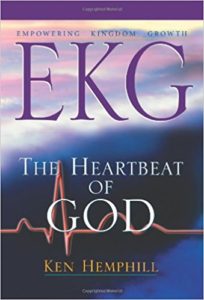
My question is, Is there not a CAUSE?  Doesn’t God expect us to do something when His name if being profaned in the way this modern-day giant is doing?  You may be wondering who is this giant I am writing about?  Today’s giant that stands against God is secular education.  Every day a vast majority of our children and youth listen and learn from this giant how man is the center of everything and God simply isn’t important or doesn’t even exist.  God’s name is being profaned and yet, many of His people, don’t do a thing about it.

What was David’s cause or motivation that led him to be able to defeat Goliath on that memorable day?  David’s cause is recorded in verse 46.

This day the Lord will deliver you into my hand, and I will strike you and take your head from you. And this day I will give the carcasses of the camp of the Philistines to the birds of the air and the wild beasts of the earth, that all the earth may know that there is a God in Israel.  1 Samuel 17:46 (NKJV)

As another school year comes to a close and many start planning for next year, I want to challenge Christians everywhere to recognize the cause for why we are in this battle.  Our cause must be that future generations will know that there is a God in our lives, our homes, our churches and our schools.  It is the only cause worth fighting for!

The Importance of Having a Kingdom Focus

By | Public Blog, Uncategorized

In preparation for a sermon I had to preach this past weekend, I was studying some of the key concepts that Dr. Ken Hemphill wrote about in his book, EKG: The Heartbeat of God.  I was reminded that Jesus declared that the kingdom of God must be our highest priority in our lives, homes, churches and schools.
But seek ye first the kingdom of God, and his righteousness; and all these things shall be added unto you. Matthew 6:33 (KJV)

In order that we may seek His kingdom, we must first understand what His kingdom is.  Hemphill explains God’s kingdom in a very understandable way.

The kingdom of God can be understood by realizing that He is our King and we are His people that He is our Master and we are His servants that He sets the rules and we simply obey.

Simply stated God’s kingdom is present wherever and whenever God reigns.  God wants to reign supreme in all of life — whether it is in the life of an individual, a family, a church or the education of one’s children.

The heartbeat of God is for His kingdom to grow.  Throughout human history God has accomplished and continues to accomplish this through a select group of people that He takes as His possession.  In the Old Testament, God chose Israel to be His possession (Exodus 9:16; 16:5).  In the New Testament, He chooses individuals or we could say the church in general (Titus 2:14).  It is important to keep in mind why God chooses nations and/or individuals to become His possession.  I again refer to what Hemphill writes in his book.

God has a claim on His people (Israel, today’s church) not just to give His people privilege or standing but to give them purpose. As His possession we are not to be admired on the shelf but to be maneuvered full force into the world.

God has chosen us, as Christians, to accomplish two purposes through our lives.

  1. God wants His people to be known to the world as demonstrated by their relationship to Him.
  2. God wants His people to fulfill their roles in all of life in order to extend His kingdom rule in the world.

God always desires to demonstrate to the world what living in a covenant relationship with Him would produce in people’s lives.

The blessings God promises to bestow upon His people were and are never intended to glorify the people but to showcase His goodness so that all the nations would be drawn to Him through His people. Ken Hemphill

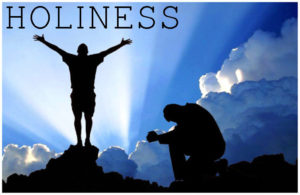
This is why He demands His people to be holy (1 Peter 1:16).  Holy means to be set apart.  Our lives should be set apart from the world in our:

  • worldview or beliefs
  • speech
  • lifestyle or behavior

This concept is also applicable to the education we give to our children and youth.  Their education must be different from the secular education that this world provides.  The difference must be evident in the school’s philosophy and the worldview from which all teaching takes place.  However, we are facing a crisis in today’s homes, churches and schools.  Hemphill accurately describes our current crisis this way.

Ours is a world where we are too often lured into being near carbon copies of our culture – Christian up to a point yet cool enough to know when we are taking it too far.  We are rewarded with the world’s acceptance when our tastes and standards look more like the prevailing norms and less like the prescribed Word of God. We feel a little bit more comfortable when we fit in.

Unfortunately, I find this very same situation infiltrating too many Christian schools.  There seems to be an effort to “fit in” with secular forms of education.  We offer the same courses, use the same textbooks and basically follow the traditions of men that Paul warned against in Colossians 2:8.  The challenge Christian parents, church leaders and educators face is that it is easier to be traditional than it is to be biblical.

I was reminded of the power of what might be referred to as the “hem of holiness”.  We find these words in Zechariah 8:22.

Thus saith the Lord of hosts; In those days it shall come to pass, that ten men shall take hold out of all languages of the nations, even shall take hold of the skirt of him that is a Jew, saying, We will go with you: for we have heard that God is with you.

This is an amazing statement.  There will be a day when people from every nation and language will cling to God’s people and beg to go with them.  Why?  It will be because they heard that God is with them.

As another school year comes to close here in this country and we start preparing for a new year, I believe it is important that we take some time and reflect on God’s call on our lives, our homes, our churches and our schools.  In light of what I have shared above, there are some questions that we need to consider.

  1. Do we desire the kingdom of God or the kingdoms of the world?
  2. Are we striving for personal/school fame or for the Father’s glory?
  3. Are our homes, churches and schools known by our relationship with God?
  4. Do we see and have we accepted our roles as leaders to extend the rule of the King?  If so, where”?  In whom”
  5. Are families coming to our schools and urging us to allow them to join and go with us because they have heard and seen that God is with us?

God still wants a people of His own who will:

  1. Embrace His mission — be God’s chosen instruments to draw the lost to Himself.
  2. Embody His name — represent His nature and character to the world.
  3. Obey His Word — have a brand of holiness that demonstrates all the noticeable difference He makes in lives.

Will Our Children Be Able To Stand?

By | Public Blog

Last week I heard a sermon on the family that had a different twist to it.  The text for the message was taken from Matthew 12:25 which reads:


And Jesus knew their thoughts, and said unto them, Every kingdom divided against itself is brought to desolation; and every city or house divided against itself shall not stand.

Those familiar with this passage know that Jesus said this to the religious leaders of His day who accused Him of casting out demons by the power of Satan.  This account is also recorded in Mark 3 and Luke 11.  So it is an important concept to understand.  At first, I was wondering how this passage could possibly relate to the family.  Then the pastor pointed out that Jesus not only said that a kingdom divided against itself will fall but He also applied this same principle to a city and a home.  Jesus was making the point that true success requires congruency or cohesiveness.  Without cohesiveness there will be division and division will lead to failure.

The pastor emphasized this important concept by defining division as having a divided vision.  This resonated with me as I have both played on many sports’ teams and coached several teams over the years.  Whenever there were players who had a different vision for what needed to be done that was different from that of the coach, the result was, most often, a loss.  Any division made success impossible.  The solution to removing division and uniting any group is that there must be a common denominator upon which all parties agree.

For the Christian, the only common denominator that will unite an individual, a family, a church or a school is God’s Word.  Paul wrote about the need to understand that the Bible stands above all human opinions and is the only foundation that unites people rather than divides them.

 All scripture is given by inspiration of God, and is profitable for doctrine, for reproof, for correction, for instruction in righteousness: That the man of God may be perfect, thoroughly furnished unto all good works. 2 Timothy 3:16-17 (KJV)

Here we find that it is profitable to go to Scripture in order to unite people and avoid having a divided house that will eventually come to destruction.  God’s Word is profitable for:

  • doctrine — what is right
  • reproof — what is wrong
  • correction — how to get right
  • instruction in righteousness — how to stay right

It was at this point in the sermon that the pastor made a profound statement.  He said, differing opinions are actually differing worldviews!  That made me stop in my tracks.  The implication of this statement was that if there was not a consistent worldview in a person’s life, in the home, church or school, there would be division.  The result would be that one’s life, a family, a church, a school etc. would be brought to destruction because it could not stand.  I must admit that with this statement my mind started racing.  I thought about James 1:8 where the writer said that a double minded man is unstable in all his ways.  

Unfortunately, most Christians suffer from double-mindedness!  We have divided our lives up into two compartments — the secular and the sacred.  Certain areas of life are controlled by a secular worldview.  The “religious” areas of life are guided by a biblical worldview.  The result is that there is no cohesiveness to our lives, our homes, churches, schools etc.  This is not something that only exists in individuals’ minds.  It is also prevalent in how we educate our children and youth.  We take them to church on Sundays so that they know what the Bible says about life.  Then, the majority of parents send their children to secular schools the rest of the week where the world tells them what life is all about.  The result is that our children are being educated in double-mindedness and, therefore, are doomed for failure and destruction.

I find this problem becoming more prevalent even in Christian education.  Too many times there is a different worldview at the basis for what is taught in Bible classes and what is taught in the other “academic” subjects.  To compound this problem, there isn’t adequate training taking place to help parents, teachers and church leaders develop a comprehensive biblical worldview.  Then, when you add the reality that an increasing number of schools tend to use secular textbooks, we can understand why the problem of double-mindedness is becoming so prevalent.

Many of us were broken hearted when we heard of the recent school shooting last week that left 10 people dead and several others wounded.  Within a few short hours of this tragedy a divided house could be clearly seen.  On one side, there were those who were demanding more gun control.  On the other side there was the warning that the other side wants to take away our constitutional right to protect ourselves.  One side said that guns were killing our children.  The other side was saying that guns don’t kill, people do.  Some agreement was heard when both sides said that part of the problem was due to lack of sufficient mental health services.  I even read a report where a former leader in the department of education hinted that students should boycott schools until gun control legislation is passed.  My mind was baffled when I read how the president of Planned Parenthood was decrying the senseless murder of children due to “gun violence”.  However, this same person heads up an organization that has been reported to have been responsible for over 300,000 abortions last year alone.  The degree to which double-mindedness has infected our culture is mind boggling to say the least.

The real problem that is behind the crumbling of society, in general, and our homes, in specific, is that there is no longer a comprehensive, consistent worldview that matches reality on which the majority of people agree.  Of course the only worldview that can provide this type of congruency is a biblical one.  Until we teach our children at home, church and school that the value of human life is found in the reality that God created each person in His own image, we will never see a decrease in the senseless loss of human life that is so common in the world today.  That is why I have spent the last couple of years developing resources that I pray will help Christian parents, church leaders and educators develop a biblical worldview.  If we don’t unite the home, church and school and provide our children with a biblical worldview education, we will continue to see future generations grow up with divided minds.  God’s Word says that when this occurs, they cannot stand; they will be brought to desolation!
It is my prayer that many families, churches and schools will become KEM Prime Members and develop a single-mindedness based on a biblical worldview.  Click here to learn more about this or email me at glen@kingdomeducation.org.  Join in this conversation by leaving a comment below.


Strengthening One’s Authority

By | Public Blog, Uncategorized

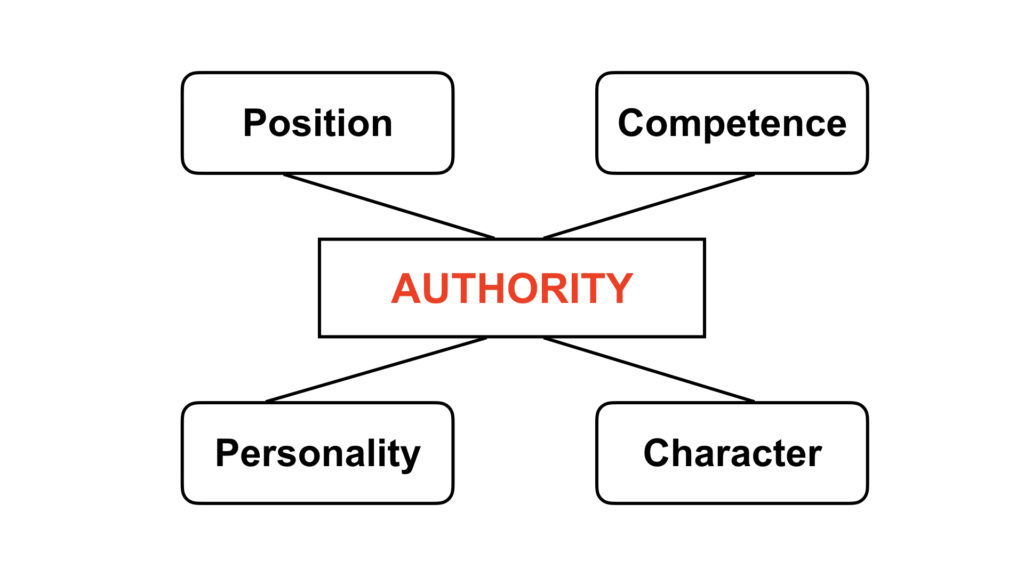
It is important that parents, church leaders and educators understand the importance of effectively exercising their authority.  Many years ago I read about what makes up one’s authority in any given situation.  The writer explained that there were four components to one’s authority or one’s power and right to command and exact obedience.  These four components that make up a person’s authority were positioncompetencepersonality, and character.  As I thought through these four components of authority, I drew a model like the one below.

Position

When a person is placed in a position of authority, he/she is given the authority needed to fulfill the responsibilities of the position.  For example, when I was placed in the position of high school chemistry teacher, I was also given the authority of a teacher to exercise in fulfilling the responsibilities of this assignment.  The same was true when I was named a coach, a high school principal, a superintendent and even became a parent.

It is important to understand that I was only given the authority that was respective to the position I was placed in.  As a teacher, I was not given the authority of a principal.  As a coach, I was not given the authority of the owner of the team.  Positional authority is constant as it is related only to the position a person has been placed in.

Competence

Competence can be defined as the ability to do something successfully, efficiently and effectively.  When I first became a teacher, I was not very competent in the act of teaching.  I never had any teacher training nor did I ever do student teaching.  If I wanted to gain greater authority in my students’ lives, I had to improve my competence as a teacher.

This was really driven home to me in my first varsity coaching experience.  The players responded pretty well to my directions but mostly

because they wanted to be on the team and get playing time.  They didn’t know anything about my basketball knowledge or ability.  This changed when a couple of the players asked me to participate in little pickup game after a practice.  I agreed and thought this would be fun to get out on the court with the guys.

It turned out that they had arranged the game in order to see what I really knew about the game of basketball.  They played pretty rough and eventually caused me to push my “competitive button”.  It wasn’t long before my college playing experience and abilities kicked in and dominated them.

The next day in practice the entire team gave me a much greater effort in every drill and aspect of practice.  I learned that my authority as a coach had increased.  This greater authority was not due to my position — I was still the coach.  However, my competence as a basketball player had increased significantly due to a little pickup game after practice the night before.

Personality

When the author talked about the influence of one’s personality as it relates to one’s authority, he was not talking about being an extrovert or introvert, or a “D” or an “S”, or a “golden retriever” or a “beaver”.  We have all taken some type of personality inventory and have been categorized in some way or another.

The aspect of personality that influences the degree of authority one might possess is related to the person’s openness or closeness.  Here it referring to how approachable are you to those who are under your authority.  This is not about being “buddies” with people.  It is about developing your personality where those you are leading can come to you and talk about a success or failure, an idea or a concern, or something that created an offense with them.

Again, this component of authority is under the leader’s control.  Anyone can improve his/her authority by working on developing relationships that allow others to approach you without being fearful.  This is very important in parenting.  If we do not exercise our parenting authority properly, it can drive our children away from bringing issues they may face in their lives to us.  Instead, they end up going to their peers or the world to get their answers to life’s questions.

Character

Character, when it comes to being a good steward of one’s authority, can be defined as one’s credit rating with people!  We all know how important it is to maintain a good credit rating when trying to purchase a house or something similar.  A poor credit rating costs a person greatly.

This is also very true when it comes to the exercise of one’s authority.  If we are not trustworthy and honest with those we are trying to influence, it will hurt our ability to exercise effective authority over them.  We must develop a strong credit rating with our children and/or students.  We must live lies of integrity where we actually do what we say we will do.

Let me try and bring all of this together.  Last week I shared how I believe that any authority I might have in life is actually given to me by God.  Therefore, He expects me to develop and invest the initial authority that He gives me so that it will bring gain to the Lord.  Again, it must be understood that authority is a stewardship responsibility.

As I shared with you the components that make up any authority we might be given in life, we must grasp the reality that there is only one component of one’s authority that he/she as no control over.  That component it the authority one has because of one’s position.  A teacher only has teacher authority.  He/she does not have administrator authority because he/she does not have the position of an administrator.

Every person, however, has control over the other three components that make up one’s authority.  It is each person’s responsibility to develop and strengthen his/her competence, personality and character in whatever position one find’s himself/herself.  An example may be helpful in making my case.

When I first became a parent, God gave me enough parental authority to handle a newborn child.  God also knew that I would need greater parental authority to direct and guide my children when they became teenagers.  That meant that I need to become more competent as a parent.  I also needed to develop an open personality that would allow my children to approach me with any problem or issue that they were facing.  It was also very important that I strengthened by character or credit rating with them if I expected them to respect my authority and submit to my guidance.

Unfortunately, I have seen parents who never developed and strengthened their parental authority that God gave them when they first became parents.  It wasn’t that they necessarily weakened their parental authority.  They basically did nothing to strengthen it.  They were like the unjust steward who hid his master’s talent in the ground.  The result that comes with not strengthening one’s authority is that that person can actually lose any influence over the ones that God wanted them to lead.  Sometimes a parent’s authority is taken away and given to another person or group.

Here are some questions we must answer as we attempt to be effective leaders and teachers of the next generation.

  1. What position(s) of authority has God given to you?
  2. What have you done or need to do to strengthen your competence related to the position(s) God has given you?
  3. How can you be more approachable as a person in authority to those you are leading?
  4. On a scale of 1 to 10 with 10 being the highest, what credit rating would you give yourself in the various positions of authority God has placed you in?  What can you do to raise your credit score in each position?

Be sure to share your comments about this post or any of the posts related to authority and submission that I have covered over the past several weeks.

Authority: A Stewardship Responsibility

By | Public Blog, Uncategorized

I have been highlighting the issue of authority and submission to authority in several of my recent blogs.  I am giving so much attention to this subject because I believe it is so essential to Christians living a life that is pleasing to God.  After all, every person is under some authority and everyone exercises some authority over someone else in some way or another.

When trying to understand authority, it is important to define the term accurately.  I have used a couple of definitions to help me understand this all-important area of life.

Authority is the right or power to command and exact obedience and/or an accepted source of expert information.

Once authority is defined accurately, it is then important to put one’s authority in the proper perspective.  When I consider authority, I see it as a stewardship responsibility from God.  Again, it is important that we have a clear understanding of what stewardship is.  Stewardship is defined in the dictionary as:

The careful and responsible management of something entrusted to one’s care.

In order for something to be entrusted in to one’s care, someone else must first own that something.  That person must have the power to give what he/she owns to another person’s care.  When I considered the many aspects of stewardship found in Scripture, I defined stewardship this way.

It is the use and/or management of something that an owner gives to me in order for the owner to receive gain or profit.  

Another way of putting this is what someone posted online.  The person made this statement.

Stewardship is the maximizing God’s blessings for His glory!

This is clearly the concept that one finds when reading the parable of the talents in the gospels.  The owner gave certain amounts of his talents to three servants.  The servants who managed the owner’s talents and produced a profit for him were praised and rewarded.  However, the one servant who did nothing with the owner’s property and simply returned what he had been given back to the owner was criticized and lost everything.

Based on these definitions, I believe that authority, when properly understood, becomes a stewardship responsibility.  Christians believe that God is the creator of the universe and is sovereign over all things.  God is literally the owner of everything that exists in both heaven and earth.  This means that He has ultimate authority over everything.  He, alone, has the right and power to command and exact obedience from the entire created universe.  He not only has the authority over all people but also over all of creation.  This is seen when Jesus told the wind and the waves to be still and they obeyed.  It can be said that God is authority!

No matter how much authority I might attain, I must always realize that I am not in charge.  God is the only One who is sovereign and has all authority.  Jesus made this clear when He stated,

And Jesus came up and spoke to them, saying, “All authority has been given to Me in heaven and on earth. Matthew 28:18

Who has given Jesus all authority?  It is God the Father who has done this.  The Father can do this because He is the supreme ruler of all things.  Consider these verses.

[God] brings princes to nothing, and makes rulers of the earth as emptiness.  Isaiah 40:23

O Lord, God of our fathers, are you not God in heaven?  You rule over all the kingdom of the nations.  In your hand are power and might, so that none is able to withstand you.  2 Chronicles 20:6

The Lord has established His throne in heaven, and His kingdom rules over all.  Psalm 103:19

Scripture also makes it clear that God gives a portion of His ultimate authority to man.  Consider the following verses.

Let Us make man in Our image, according to Our likeness; let them have dominion over the fish of the sea, over the birds of the air, and over the cattle, over all the earth and over every creeping thing that creeps on the earth…Be fruitful and multiply; fill the earth and subdue it; have dominion over the fish of the sea, over the birds of the air, and over every living thing that moves on the earthGenesis 1:26-27

The heaven, even the heavens, are the Lord‘s: but the earth hath He given to the children of men. Psalm 115:16

Since God “owns” or “is” authority, any authority I might possess has to have been given to me by God.  In line with all the other stewardship responsibilities that God has given me, I must use, manage, and/or invest my authority in such a way that it will bring Him gain or profit.  This is in essence what it means to glorify God.  The stewardship of my authority as a parent, teacher, administrator, church member, etc. must be exercised in such a way that it brings Him glory.

Here are some question that come to my mind when I think about the authority that God has given me.  How would you answer them?  Better yet, how would those whom you have authority over answer these questions?

  1. Have you looked at any authority you might have as being given to you by God?
  2. Since any authority you have has been given to you by God, what are some of the ways that you should exercise that authority so that God will be glorified?
  3. In what ways have you been a poor steward of the authority God has given you in some area(s) of life?
  4. What are some things you will do in the future as you steward the authority that God has given you?

I always appreciate your comments that you can leave below.  Next week I am going to share a model of authority that has helped me be a better steward of any and all authority God has given to me.

Exercising Authority

By | Public Blog, Uncategorized

Over the past couple of weeks I have attempted to address the issue of authority and subjection from a biblical perspective.  So far, we have seen how authority is set in place for the purpose of function not importance.  Anyone who finds himself in a position of authority is not to think more highly of himself than those he is leading.

We also looked at how submission to authority is not a negative thing but something that is good.  This is because even Jesus lived a life of full submission to His Father.  In fact, the degree to which I submit to the authority God places over me determines how Christlike I am becoming.

Since God establishes authority which, in turn, requires submission to authority, why is there such a problem with all of this throughout civilization?  All one has to do is look at what is going on in governments around the world or in everyday life to see that there is constant resistance, rejection and even rebellion to any and all forms of authority.  The answer to this dilemma is two-fold.

First, we must understand that because of the Fall, the flesh never wants to submit to any authority.  The flesh wants to be completely autonomous.  This is what led to sin in the first place.  Adam rejected God’s authority in his life and chose to do what he thought to be best.  Sinful man’s condition can be summed up in the phrase that is found throughout the book of Judges.

In those days there was no king in Israel; everyone did what was right in his own eyes.        Judges 17:6

No one wants a king in his life.  I believe that is why people will continue to believe in evolution when everything in the universe shouts of a creator.  If man admits that there is a supernatural being who created everything, then man must also admit that he is accountable to Him.

The second reason why I believe that just about all institutions of authority are being rejected has to do with how people exercise their authority.  This is true in the family, church, education, government and society in general.  The Bible speaks a great deal of how important it is for people to submit to authority.  However, many Christians don’t give much heed to what the Bible says about how one is to exercise his/her authority.

Over the past few years, I have given a great deal of thought into a very familiar passage of Scripture.  I have found this verse to have significant meaning on just about every aspect of my life.  I am sure you probably have memorized this verse and quoted it at one time or another.

Do not be deceived, God is not mocked; for whatever a man sows, that he will also reap. Galatians 6:7

Too often, we apply this to what happens when we commit sin.  If we sow to the flesh, we will reap corruption.  However, I have been convicted lately about the fact that this verse applies to every aspect of my life.  Being a teacher and a coach, I always wanted my students to pay attention to what I was presenting in a lesson or trying to execute in a practice.  I would get frustrated and sometimes angry if students weren’t paying attention or not putting forth the expected effort.

Then I was confronted with how I was paying attention or putting forth effort when listening to the preaching of God’s Word in a church service or sitting in a lecture or some staff development training in my job.  I had to admit that many times I didn’t pay attention the way I should have.  This was especially true when I found myself thinking that what someone else was saying wasn’t what I thought was all that important.  The thought hit me that when my students didn’t pay attention to me was I simply reaping what I had sown when I was in the role of being a student?

So it is with the exercise of one’s authority.  I will reap the consequences of what I sown in how I exercise any authority that God gives me.  If I “lord it over” those I am to lead, then I will reap anger and resistance from them.  If I am always “threatening” others, I will reap a challenging spirit from those I am trying to lead.

God taught me a very valuable lesson related to how He expects us to exercise authority that He gives us.  I was teaching a Bible ethics class at a Christian school.  We were studying a series of biblical principles that were to guide us in making decisions.  Everything was going fine until we got to the principles of authority and submission/obedience.  As soon as I announced the topic the students reacted negatively.  Their mindset was that is all they ever hear — obey, obey, obey!

I knew that they needed to understand authority and submission/obedience if they were going to go out and live successful lives.  I took them to two passages of Scripture and asked them a question related to each verse.  These two verses were:

…ye fathers, provoke not your children to wrath: but bring them up in the nurture and admonition of the Lord. Ephesians 6:4

Fathers, provoke not your children to anger, lest they be discouraged. Colossians 3:21

Here are the two questions that I asked them.

  1. What does your authority [parents] do that causes wrath in your life?
  2. What does your authority [parents] do that brings discouragement in your life?

Their answers were convicting.  They told me that when someone in authority is dictatorial or authoritarian in how he/she exercises their authority, it created anger and wrath in their lives.  The attitude that says I am the boss, do what I say, because I say so resulted in angry reactions from these students.

Then they told me that what caused discouragement in their lives was when people in authority were too lenient.  This answer was surprising so I asked them to explain it.  Students explained when people in authority were not willing to set clear boundaries and hold them accountable to staying within those boundaries, they believed that their authority didn’t care about them.  They got the sense that their authority, many times their parents, wanted to be “liked” by them and were more interested in their own comfort rather than the good of the child.

Both of their responses dealt with “how” one exercises his/her authority — not with the fact that they “had” authority over them.  There are several passages of Scripture that gives us guidance in how we are to exercise authority over those we are to lead.  It would be good if we studied these passages and lived them out in our daily interactions with others.  I have listed some of the passages I have found helpful.

  • Matthew 5:3-11 – the Beatitudes which I see as “the attitudes it takes to be something in God’s kingdom.”
  • Ephesians 6:9
  • 1 Peter 5:1-3
  • Mark 10:36-45
  • Colossians 4:1

What do these verses tell you about how you are to exercise your authority?  What other verses have you found helpful in being a servant leader?  Leave your comments below.


My Flesh Always Wants To Say NO!

By | Public Blog

If you want to get a good argument going, all you have to do is bring up the topics of authority and submission.  Trying to discuss the importance of authority and submission in today’s culture is sure to ignite a lot of healthy and not-so-healthy debate.  Yet, it is important to have a biblical understanding of these two words if any marriage, organization, or society is going to be able to survive.  In fact, the reason we are such a divided country and why there is so much crime, corruption and mistrust in all aspects of life is because we have rejected all forms of authority that are necessary for a civilization to survive.

People in authority are viewed with skepticism and suspicion.  The very mention of the need for “submission” to authority is met with hostility and resentment.  The concept of submission to authority is always looked at from a very negative viewpoint and anyone who is in a position of authority is seen as being power-hungry and merely wanting to control and, even, enslave others.  However, authority and submission are biblical principles that are a reflection of the very nature of God.

God is authority and exercises it over everything.  The concept of submission is seen within the Trinity before any of this universe was ever spoken into being.  When God created man in His image, God gave man “dominion” over the earth.  This means man had God-given authority over the earth and all living things on the earth.

To get a glimpse of the wonder and beauty of the principles of authority and submission, one only has to look at the life of Jesus.  As God, Jesus, had authority over the seas when He commanded them to be still.   He also had authority over sickness and disease; for He healed many who came to Him by simply speaking a word.  Jesus exercised full authority over demons by casting them out of tormented people and sometimes not even allowing these spirits to speak.  Of course, we also know that Christ showed ultimate authority when He commanded Lazarus to come out of the grave — a man who had been dead for four days.

Even though Jesus had great authority, He is also a beautiful picture of submission.  Consider what Jesus said on several occasions about His desire to submit to the Father’s will.

And he went a little farther, and fell on his face, and prayed, saying, O my Father, if it be possible, let this cup pass from me: nevertheless not as I will, but as thou wilt. Matthew 26:39

 He went away again the second time, and prayed, saying, O my Father, if this cup may not pass away from me, except I drink it, thy will be done. Matthew 26:42

For I came down from heaven, not to do mine own will, but the will of him that sent me. John 6:38

 And when all things shall be subdued unto him, then shall the Son also himself be subject unto him that put all things under him, that God may be all in all. 1 Corinthians 15:28

Who [Christ], being in the form of God, thought it not robbery to be equal with God: but made himself of no reputation, and took upon him the form of a servant, and was made in the likeness of men: and being found in fashion as a man, he humbled himself, and became obedient unto death, even the death of the cross. Philippians 2:5-9

From these verses it can be said that both the reality of authority and submission to authority is not something that is negative and, therefore, should be avoided at all cost.  But these realities are actually divine in nature.  If this is the case, why do people bristle against the concept of authority structures and literally rebel at the notion of the need for everyone to submit to someone else?  The answer is found in what took place in the Garden in Genesis 3.  As Christians, we refer to this as the Fall.

Before the Fall, man lived in perfect harmony with God.  Man lived in full submission to His authority as sovereign Creator of the universe.  This all changed when sin entered the picture.  In fact, the actual sin that Adam committed was the rejection of God’s authority in his life.  By eating of the fruit that God had forbidden him to eat, Adam was rebelling against God’s authority to tell him what he should and/or should not do.  In reality, all sin is some form or another of man’s refusal to submit to the will of God.  It shows that man is determined to live his life by, in the words of Frank Sinatra, doing it MY way! (emphasis mine).

From Genesis 3 till the end of life here on earth, every person is born with a sin nature that demands autonomy.  No one should be able to tell me what I am supposed to do or not do!  I have my rights!  It is my life and I will do with it what I want to!  These are all things we hear people boasting about every day.  I think we would agree that the first thing most children learn to say is NO!   We want to be in control period!

Here are just a few examples of people in Scripture who rejected God’s authority in their lives and refused to submit to His will.  In each case, the consequences were disastrous.

  • Adam and Eve eating the forbidden fruit
  • Cain refusing to bring an acceptable sacrifice to the Lord
  • Israel’s unwillingness to enter the Promised Land
  • Israel wanting a king so they can be like other nations
  • Pharisees rejecting the Messiah
  • Prodigal demanding “his” inheritance
  • Elder son refusing to celebrate his brother’s return
  • Judas’ betrayal of Christ

If we are going to raise up future generations that will live their lives in ways that will glorify God and impact and expand His kingdom here on earth, we must not only understand the biblical principles of authority and submission but, more importantly, embrace these two principles in all areas of our lives.

There are many things that we need to understand and re-introduce into our lives, our families and, even, our churches about authority and submission.  However, there are only two things that I will mention in this post.  Here are some truths that have helped me understand and respond properly to authority and submission.

  1. God ordains all authority.  Most of us can probably list Scripture passages that make this point very clear.  The reason this is so important is because it also means that every time anyone in history has refused to submit to his/her authority, he/she has, in essence, rejected God’s authority in his/her life.  This is specifically stated in Scripture when Israel demanded a king. God told Samuel that the people weren’t rejecting Samuel but were rejecting Him.
  2. Authority isn’t about importance and status.  It is only for function.  Someone who is placed in a position of authority, especially in alignment with Scripture, isn’t more important than any other person(s).  Authority is a God-ordained structure to ensure that people function properly.  This is true for a family, a school or other organization, a church, or a community/society.

In future posts, we will discuss some specifics about the functioning of authority structures and what God expects out of all of us when it comes to authority and submission to it.  In closing, here are some questions we all need to ponder.

  1. Do you have a negative image of people in authority and/or the idea of submission to authority?
  2. In what ways do you reject/resist someone in authority?
  3. Are there areas in your life, your family, work, etc. where you struggle with submission?
  4. What kind of an example are you to your children/youth/students when it comes to exercising authority and/or submitting to it?

Your comments are important so please share your thoughts on this topic below.

Both Sides Have The Wrong Starting Point!

By | Public Blog, Uncategorized

I don’t ever remember when American culture was more divided.  It seems that when topics such as government, public spending, regulations, social welfare, individual rights, and race or gender are discussed, there are two polarizing sides each claiming to be right.  Even more disconcerting is the fact that each side claims that the other side is endangering our freedom and liberty.  The two sides even claim that they are trying their best to “defend the US Constitution”.

There are the “conservatives” who argue that the Constitution doesn’t change and must be interpreted by the original meaning of the writers of the document.  Then, there are the “progressives” who contend that the Constitution is a “living document” that must be interpreted in light of modern day circumstances and a more knowledgeable populace.

So the two sides face off.  One opposes all gun control efforts as threatening the 2nd Amendment that they say is foundational to our freedom and liberty.  The other side is marching in the streets demanding “reasonable” gun control laws so that our freedom and liberty can be protected.  How can one document be used to support two opposing arguments related to not only this debate but every other issue in life?  The reality is both sides are making their arguments from the wrong starting point.  They are starting with the Constitution being the foundation stone for freedom and liberty.

The reality is that the US Constitution is only the product that was drafted and ratified because of the Founders’ belief in two major foundation stones that guarantee individual and corporate liberty.  Just going back to the Constitution does not allow us to know what is right when it comes to the protection of one’s liberty.

If we are ever going to understand the truth that should guide us in all areas of our life, we must go back to the very foundation of the country and the Constitution.  Without doing that, the battle will simply increase and society will be completely polarized.  It is then when the winner will simply be the most powerful and true liberty will disappear.  What was at the foundation of the country and resulted in the ratification of the US Constitution?  To find this out we need to look at some of the writings of the very people who came to the New World.

In the name of God, Amen.  We whose names are underwritten…having undertaken, for the glorie of God, and advancement of the Christian faith… a voyage to plant the first colony.  Mayflower Compact 1620

Some of the very first settlers in the New World were driven by a desire to glorify God and advance the Christian faith.  If we proceed to when the country’s leaders were formulating the Declaration of Independence and the Constitution, we would find the foundation stones necessary for true liberty and freedom.

Of all the dispositions and habits which lead to  political prosperity, religion and morality are indispensable supports.  George Washington

Statesmen…may plan and speculate for liberty, but it is Religion and Morality alone, which can establish the Principles upon which Freedom can securely stand.  John Adams

The only foundation for…a republic is to be laid in Religion.  Without this there can be no virtue, and without virtue there can be no liberty, and liberty is the object and life of all republican governments.  Benjamin Rush

Here we find two foundation stones upon which the Founders believed all true liberty must stand — Religion and Morality.  Some say that it would be wrong to say that the Founders of the country were all Christians and, therefore, they weren’t necessarily referring to Christianity.  However, we need only go on and read further what these men believed.  They didn’t want to be misinterpreted or misunderstood.  They were very clear on what they believed had to be at the foundation of a nation that would guarantee freedom and liberty (emphasis mine),

…no truth is more evident to my mind than that the Christian Religion must be the basis of any government intended to secure the rights and privileges of a free people.  Noah Webster

The only foundation for…a republic is to be laid in Religion…Christianity is the only true and perfect religion; and that in proportion as mankind adopt its principles and obey its precepts they will be wise and happy.  Benjamin Rush

Without morals, a republic cannot subsist any length of time; they therefore who are decrying the Christian religion…are undermining the solid foundation of morals, the best security for the duration of free governments.  Charles Carroll

…the moral principles and precepts contained in the Scriptures  ought to form the basis of all our civil constitutions and laws…All the mysteries and evils which men suffer from vice, crime, ambition, injustice, oppression,salvery, and war, proceed from the despising or neglecting the precepts contained in the Bible.  Noah Webster.

Daniel Webster seemed to put all of these thoughts into a succinct understanding of the foundation for freedom and liberty when he wrote,

To preserve the government we must also preserve morals.   Morality rests on religion; if you destroy the foundation, the superstructure must fall.  When the public mind becomes vitiated and corrupt, laws are a nullity and constitutions are waste paper.

The reality is that there must be morality in order to have liberty.  However, morality must be based on a standard.  The only right standard for morality that will guarantee liberty is religion.  It cannot be any religion because we have clearly seen that there is no liberty in many countries who were or are run on the teachings of false religions.  The only “religion” that sets an absolute standard for morality is Christianity.  The standard for morality found in Christianity is given to man in God’s Word — the Bible.  Here is what this would look like in a model.

Unfortunately, these two cornerstones of liberty have been purged from our educational institutions today, from preschool through graduate school.  Of course, this had to happen when Americans said that education must be secular and there had to be separation of church and state at all levels of public life, especially schooling.  In last week’s blog, I showed how secular education may not directly attack God and/or the Bible.  Instead, secular education simply says it is removing any “religious” bias or reasoning from learning.  That is because secularists believe that religious/spiritual things are personal and subjective.  There is no place for them in the public arena that is concerned only with “neutral” facts and knowledge.


So, we are left with fighting for what each side believes to be key to us sustaining our liberty by trying to justify their position on their interpretation of the Constitution.  Neither side can win the debate because the only true interpretation of this magnificent document can be found when looking at it through the lens of a biblical worldview.  We must give our children and youth a biblical worldview education — our liberty is hanging in the balance!  What are your thoughts?