
 Where did the summer go? It is hard to believe that a new school year is getting ready to start. Looking back over the past few months, I find myself amazed at all God did in my life and ministry. I am ready to move forward in my efforts to advance His kingdom.
Even though I have not posted any blogs for several weeks, it has been an extremely busy and productive time. It was good to take a break from posting to dig into the riches of Scripture, spend some quiet time with the Lord and, once again, prove His perfect will for my life. Here are some of the highlights from this summer.
I conducted the first Kingdom Education™ Summit at Word of God Ministries in Shreveport, LA in July. God did a work that exceeded all of my expectations. Over 120 pastors, church leaders and Christian educators from 17 states met for 3 days to address the issue of education biblically. I am grateful for the wonderful assistance that Dr. Luke Bowers, Mr. Tim Euler, Dr. Sonny Sherrill and Mr. Ben Shettler provided to help make the Summit such a success.
It was the first time since writing Kingdom Education: God’s Plan for Educating Future Generations that I was able to define and present this philosophy in detail. It was encouraging to watch as the delegates realized that education did not equate to schooling as they discussed how the home, church and school had to embrace the biblical principles of Kingdom Education™ in order to fulfill the Great Commission and make disciples of all nations.
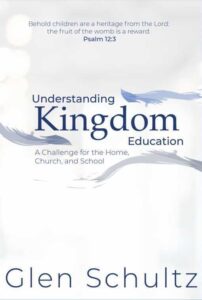
At the Summit, I was also able to introduce two new companion books to my original book, Kingdom Education: God’s Plan for Educating Future Generations. After months of writing and editing, Understanding Kingdom Education: A Challenge for the Home, Church, and School and Applying Kingdom Education: Following God’s Instructions for Educating Future Generations became a reality. Delegates at the Summit were given complimentary copies of all three Kingdom Education™ books. Click Here for more information on these new resources.
Each day of the Summit a different aspect of Kingdom Education™ was presented. The first day focused on Understanding Kingdom Education™. On the second day, the delegates broke into work groups focusing on Applying Kingdom Education™. Advancing Kingdom Education™ was the focus on the final day of the Summit as challenges were given to the home, church and school along with corresponding panel discussions.
God did another amazing thing over the summer. More than 50 years ago several Christian school leaders saw the need to train a new generation of Christian school educators. Dr. Roy Lowrie, Jr., Dr. William Male and others started what became known as the International Institute for Christian School Educators (IICSE). The Institute met on the campus of Grace College in Winona Lake, Indiana for many years.
As a young Christian school administrator, I attended IICSE in 1978. It was during that week that God started developing in my mind a biblical philosophy of education. It was also at the Institute that year that the Association of Christian Schools International (ACSI) was formed.
Many years later, Dr. Lowrie moved IICSE to the campus of Columbia Bible College, now Columbia International University. I had the privilege of being one of the keynote speakers at the Institute the first year it was held at CIU. Unfortunately, Dr. Lowrie had unexpectedly passed away just prior to the event.
Over the years, IICSE has maintained its original mission to present and instill a biblical philosophy of education in the hearts and minds of Christian school educators from around the world. The Institute had a profound impact on many of my fellow Christian school educators of my generation.
This summer, Dr. Milton Uecker, contacted me to ask me a very important question. Dr. Uecker has directed the IICSE ever since Dr. Lowrie’s passing. He and the team from CIU had been led of God to transfer the Institute to another organization that could carry on its rich legacy. I was humbled to learn that Kingdom Education™ Ministries was chosen to assume the leadership for the IICSE.
Dr. Uecker was unable to attend the Summit; however, he put together a short video announcing this partnership with the Lowrie Center and Kingdom Education™ Ministries. Click Here to watch.
As the new school year is getting started, I am excited about several opportunities I have to provide staff development sessions at various Christian schools. Over the next few weeks, I will be challenging today’s Christian educators to understand and apply Kingdom Education™ in all they do.
It is my prayer that God will continue to lead Kingdom Education™ Ministries as we strive to restore individuals, empower the home, engage the church and transform schools through Kingdom Education™. I ask that you join me in praying for God to unite the home, church and school into a unified whole to make disciples of all nations!
 This will be my last post for a few weeks. I will be taking some time to get alone with the Lord and listen to what He has to say to me about the future. I have often found that taking time to be refreshed leads to being recharged and reignited about serving the Lord.
 My father was a very principled man. His life was marked by discipline and hard work. He lived such a life, even though he suffered from severe arthritis and psoriasis for most of his adult life. I cannot remember him being able to walk any long distance or do any type of physical exercise without experiencing great pain. However, I never heard him complain and, through all of these struggles, he exhibited an unbelievable work ethic.
 I have been asked this question a lot recently. In fact, I have asked myself this question quite often. Maybe you, too, have asked the question, Why? Consider the following forms of this question.
 For the past couple of weeks, I have been engaged in some interesting reading. Many ideas that I have come across through these readings have caused me to ask myself quite a few questions about life, in general, and specifically about education. Here is just a sample of what I have been studying during the last couple of weeks of May and the first few days of June.
 In my recent posts, I have been asking some important questions related to the education of future generations. As another school year comes to an end, we need to think about the important role that one’s philosophy of education plays in the education we give our children and grandchildren.
 When speaking at a worldview conference a few weeks ago, I shared the results from a 1993 report entitled, The State of Christian Education. Over 500 Christian schools had participated in an evaluative assessment. The schools were members of various Christian school organizations and the majority of schools had enrollments exceeding 200 students. One of the alarming statistics in this report was that,
 My new two-book series, Understanding Kingdom Education™, is scheduled for release at the Summit. These two new resources are companion books to Kingdom Education™ that will lead one into a deeper understanding of God’s plan for educating future generations. A copy of each book will be given to all delegates.
 Last week I shared with you some of the lessons that God has taught me since I began teaching middle school history classes for the remainder of the year. History is very important to God and our relationship with Him. I shared two important lessons I learned in
 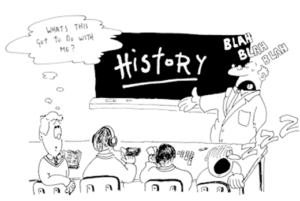 As I shared in last week’s post, I am teaching 6-9th grade history at our local Christian school for the remainder of the year. It has been exciting to be back in the classroom and sharing truth with the students. If you haven’t read last week’s article, I encourage you to do so. You can access it
Recent Comments